
Introduction
You set your alarm, roll out of bed, and face the same morning question: What can I eat that won’t wreck my diet before 9 AM?
It’s a frustration millions of people share. You want to eat something satisfying. Something real. But you also know that the wrong breakfast — even one that sounds healthy — can quietly pack in 500, 600, even 700 calories before you’ve left the house.
Here’s the truth: losing weight doesn’t mean skipping breakfast or choking down something bland and joyless. It means finding the right foods — the ones that are low in calories but high in protein, fiber, and flavor.
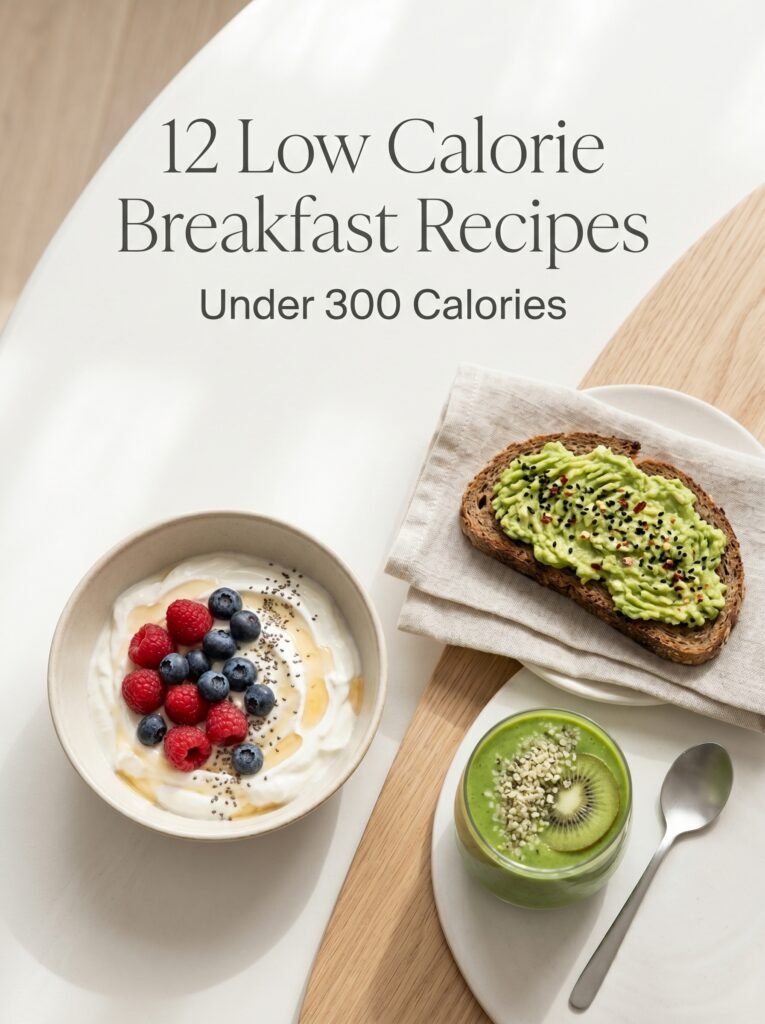
That’s exactly what this article delivers. These low calorie breakfast recipes under 300 calories are realistic, beginner-friendly, and genuinely delicious. Whether you have 5 minutes or 20, you’ll find something here that fits your morning and supports your goals.
Let’s get started.
📋 Quick Summary
Key takeaways from this article:
- Why eating a smart breakfast matters for weight loss
- The real benefits of keeping breakfast under 300 calories
- 12 low calorie breakfast recipes under 300 calories — each with full ingredients and instructions
- Practical tips for keeping your morning meals light without feeling deprived
- Common mistakes that secretly inflate your calorie count
- How to build a balanced, sustainable healthy low calorie breakfast habit
- FAQs answered honestly and clearly
Why Choose Low Calorie Breakfasts?
Breakfast sets the tone for your entire day — and not just emotionally. What you eat in the morning directly influences your hunger hormones, blood sugar, energy levels, and total daily calorie intake.
When you start the day with a heavy, high-calorie meal, your body spends the rest of the day trying to compensate. Blood sugar spikes, then crashes. You feel sluggish. You crave more sugar. Before you know it, it’s 3 PM and you’ve already gone over your calorie goal.
Choosing low calorie breakfast recipes under 300 calories breaks that cycle.
A lighter breakfast built around protein and fiber satisfies hunger efficiently without using up a disproportionate share of your daily calorie budget. It leaves room for proper meals the rest of the day, reduces the urge to snack compulsively, and trains your body to feel satisfied with less over time.
In addition, research consistently shows that people who eat intentional, structured breakfasts make better food decisions throughout the entire day. The habit of starting well cascades forward.
However, “low calorie” doesn’t mean “low value.” The best low calorie breakfast ideas are nutritionally dense — packed with protein, fiber, and micronutrients — not just calorically small. That distinction matters enormously for your energy and your results.
Benefits of Eating Breakfast Under 300 Calories
Still not convinced a breakfast under 300 calories can work for you? Consider what a consistently lighter morning meal actually delivers:
1. Creates a Natural Calorie Deficit If your daily weight-loss goal is 1,500–1,800 calories, keeping breakfast at or under 300 gives you generous room for lunch, dinner, and snacks. No white-knuckling required.
2. Reduces Blood Sugar Swings Low-calorie breakfasts built around protein and fiber digest slowly. That means no sharp blood sugar spike — and no crash an hour later that sends you reaching for the biscuit tin.
3. Supports Fat Burning Eating a smaller, protein-rich breakfast can encourage your body to burn stored fat for energy, particularly in the late morning when it’s been a few hours since you ate.
4. Improves Mental Clarity A heavy meal diverts blood flow to digestion. A lighter, nutrient-dense breakfast does the opposite — it fuels your brain without weighing your body down.
5. Builds Sustainable Habits The biggest advantage of low calorie breakfast ideas is that they’re sustainable. Unlike crash diets or meal skipping, a 250–300 calorie breakfast is something you can maintain long term — and that’s where real results come from.
6. Reduces Overeating at Other Meals Counterintuitively, a protein-rich breakfast under 300 calories often reduces total daily calorie intake more than skipping breakfast does. You arrive at lunch less hungry, less reactive, and more in control.
12 Low Calorie Breakfast Recipes Under 300 Calories
Every single one of these low calorie breakfast recipes under 300 calories uses common, affordable ingredients. No special equipment, no obscure superfoods — just straightforward food that genuinely works.
1. Two-Egg Spinach Scramble — 230 Calories
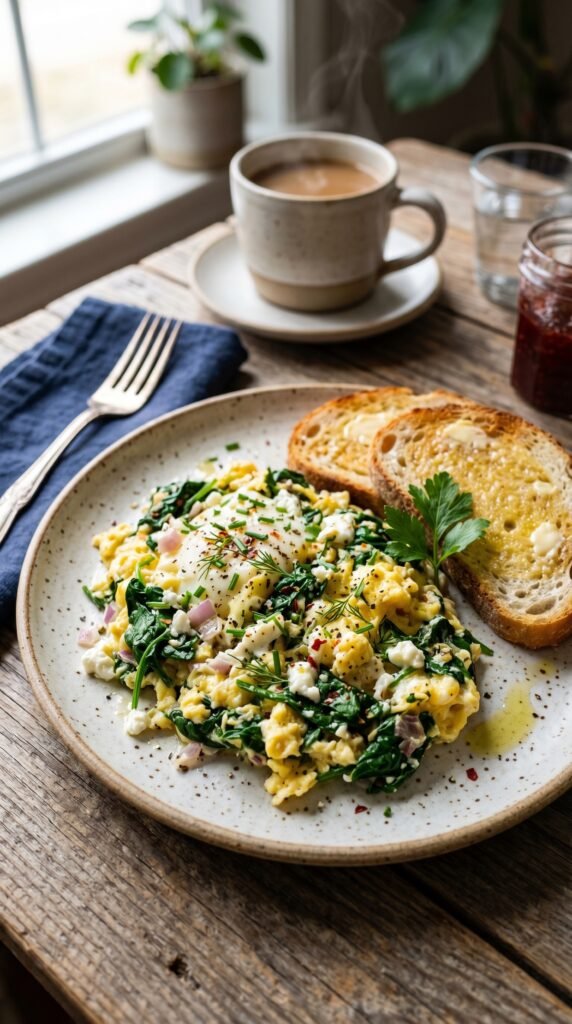
One of the fastest low calorie breakfast recipes under 300 calories you can make, and one of the most satisfying. Eggs and spinach is a classic combination that never gets old.
Ingredients:
- 2 large eggs
- 1 cup fresh baby spinach
- 1 teaspoon olive oil
- Salt, pepper, and garlic powder to taste
Instructions:
- Heat olive oil in a non-stick pan over medium heat.
- Add spinach and sauté for 1–2 minutes until wilted.
- Whisk eggs with salt, pepper, and garlic powder.
- Pour over spinach and scramble gently until just cooked.
- Remove from heat and serve immediately.
Calories per serving: ~230
💡 Tip: Add a tablespoon of low-fat feta cheese for a salty, creamy twist — it adds only about 25 extra calories.
2. Plain Greek Yogurt and Berry Bowl — 195 Calories
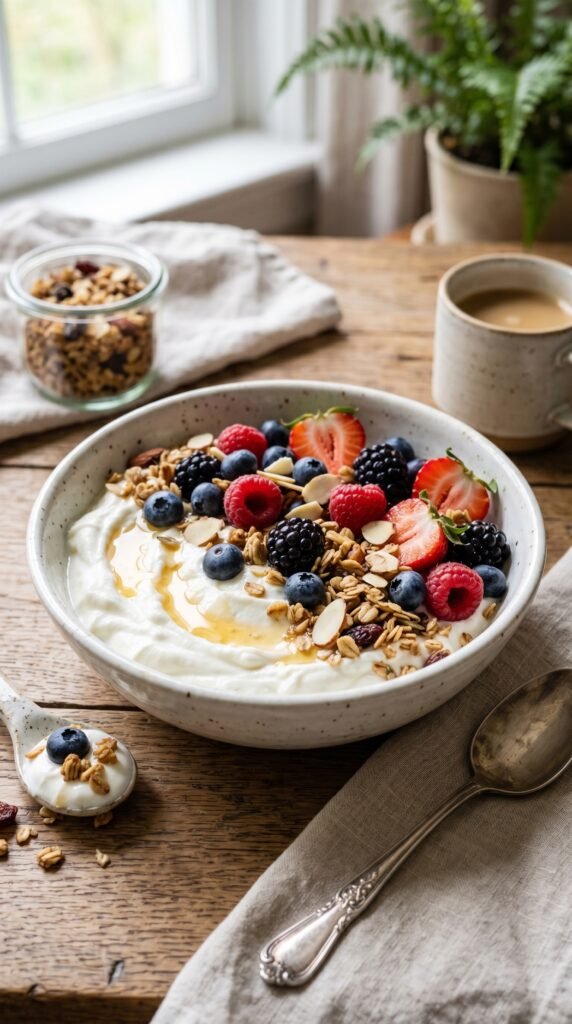
This no-cook diet breakfast recipe is proof that simple can be brilliant. High protein, high fiber, zero heat required.
Ingredients:
- ¾ cup plain non-fat Greek yogurt
- ½ cup mixed berries (blueberries, raspberries, strawberries)
- 1 teaspoon honey
- ¼ teaspoon cinnamon
Instructions:
- Spoon Greek yogurt into a bowl.
- Add mixed berries on top.
- Drizzle honey lightly and dust with cinnamon.
- Serve immediately.
Calories per serving: ~195
💡 Tip: Frozen berries work beautifully here — thaw them overnight in the fridge and they’re ready to go in the morning.
3. Overnight Chia Seed Pudding — 215 Calories
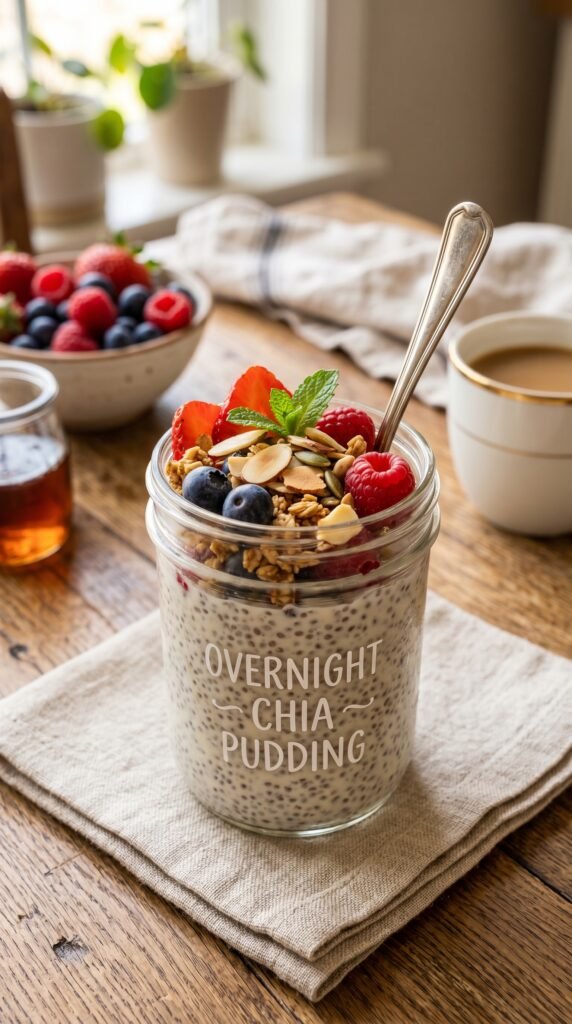
Make this the night before and wake up to a ready-made, creamy breakfast. This is one of the most popular low calorie breakfast recipes under 300 calories for people with busy mornings.
Ingredients:
- 2 tablespoons chia seeds
- ¾ cup unsweetened almond milk
- ½ teaspoon vanilla extract
- 1 teaspoon maple syrup
- ¼ cup sliced strawberries (to serve)
Instructions:
- Stir chia seeds, almond milk, vanilla, and maple syrup together in a jar.
- Stir again 5 minutes later to prevent clumping.
- Seal and refrigerate overnight (minimum 4 hours).
- In the morning, top with sliced strawberries.
- Stir and eat straight from the jar.
Calories per serving: ~215
💡 Tip: Batch prep 3–4 jars on Sunday evening and breakfast is sorted for most of the week.
4. Banana Egg Pancakes — 240 Calories
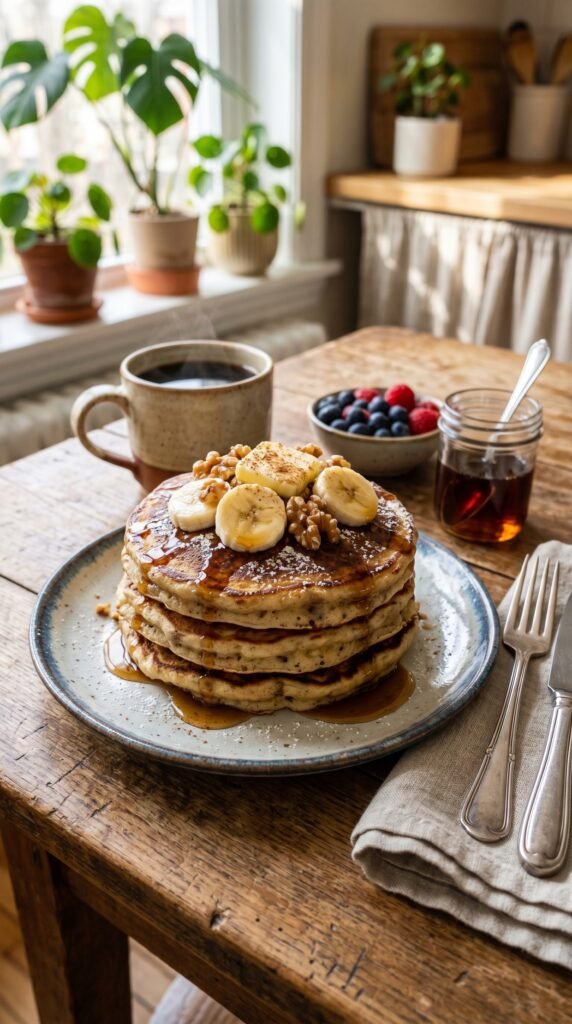
Yes, pancakes. These flourless, sugar-free, two-ingredient pancakes are among the most beloved low calorie breakfast recipes under 300 calories in the fitness community — and they taste far better than they have any right to.
Ingredients:
- 1 ripe banana
- 2 large eggs
- ¼ teaspoon cinnamon
- Cooking spray
Instructions:
- Mash banana thoroughly in a bowl until smooth.
- Add eggs and cinnamon, and beat until fully combined.
- Heat a non-stick pan over medium-low heat and coat with cooking spray.
- Drop heaped tablespoons of batter into the pan to form small rounds.
- Cook 1–2 minutes per side until lightly golden.
- Serve with a few fresh berries if desired.
Calories per serving: ~240
💡 Tip: Use a very ripe banana — the browner the better. It makes the batter sweeter and smoother.
5. Cottage Cheese and Cucumber Bowl — 165 Calories
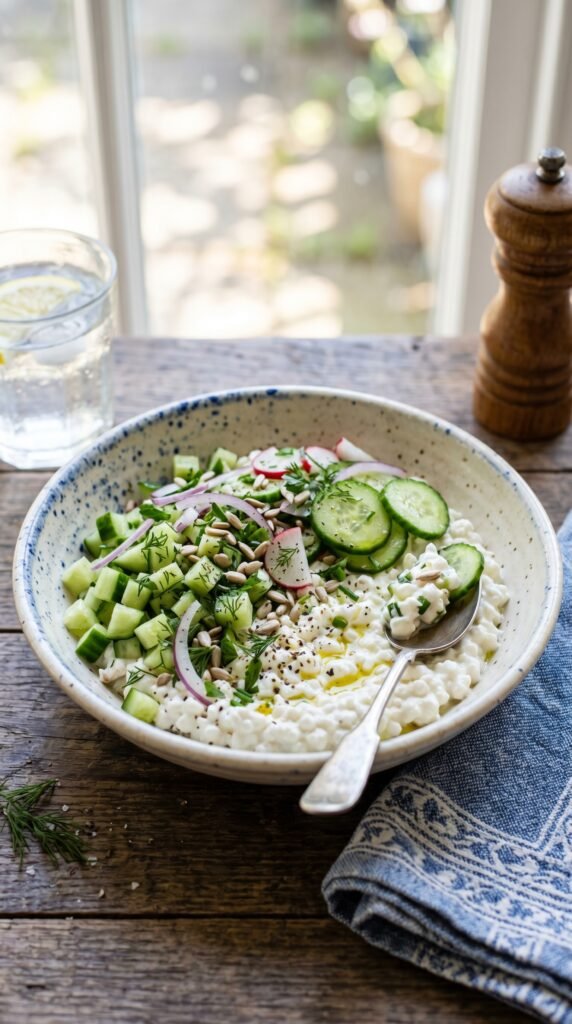
This refreshing savory bowl is criminally underappreciated. It’s one of the lowest-calorie options on this list and one of the highest in protein — a perfect healthy low calorie breakfast for weight loss.
Ingredients:
- ½ cup low-fat cottage cheese
- ½ medium cucumber, sliced
- 1 tablespoon sunflower seeds
- Fresh chives or dill
- Red pepper flakes, salt, and black pepper
Instructions:
- Spoon cottage cheese into a bowl.
- Arrange cucumber slices alongside or on top.
- Sprinkle sunflower seeds, chives, and seasoning.
- Serve immediately.
Calories per serving: ~165
💡 Tip: Add a few cherry tomato halves and a squeeze of lemon — it elevates the whole bowl with minimal calories.
6. Egg White and Veggie Omelette — 180 Calories
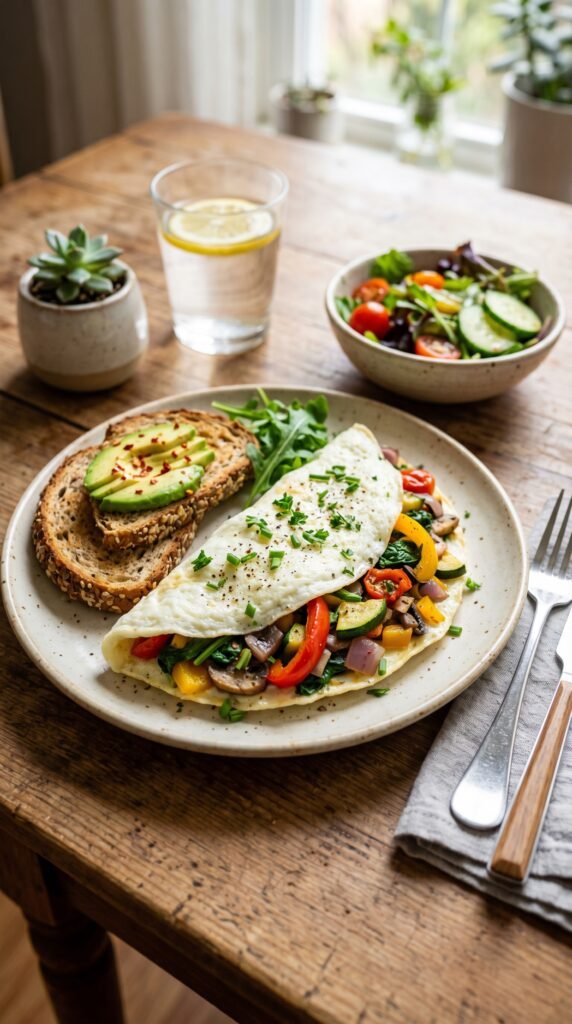
Swapping whole eggs for egg whites cuts calories dramatically while keeping protein high. This colourful omelette is one of the leanest low calorie breakfast recipes under 300 calories you can cook.
Ingredients:
- 4 large egg whites
- ¼ cup diced red bell pepper
- ¼ cup sliced mushrooms
- 2 tablespoons diced white onion
- Salt, black pepper, and mixed dried herbs
- Cooking spray
Instructions:
- Whisk egg whites with seasoning until slightly frothy.
- Spray a non-stick pan and heat over medium heat.
- Add vegetables and cook for 2–3 minutes until softened.
- Pour egg whites over vegetables, tilting the pan to coat evenly.
- Cook without stirring until edges are set (about 2 minutes).
- Fold in half, slide onto a plate, and serve.
Calories per serving: ~180
💡 Tip: A spoonful of plain salsa on the side adds big flavor for essentially zero calories.
7. Avocado Egg White Toast — 265 Calories
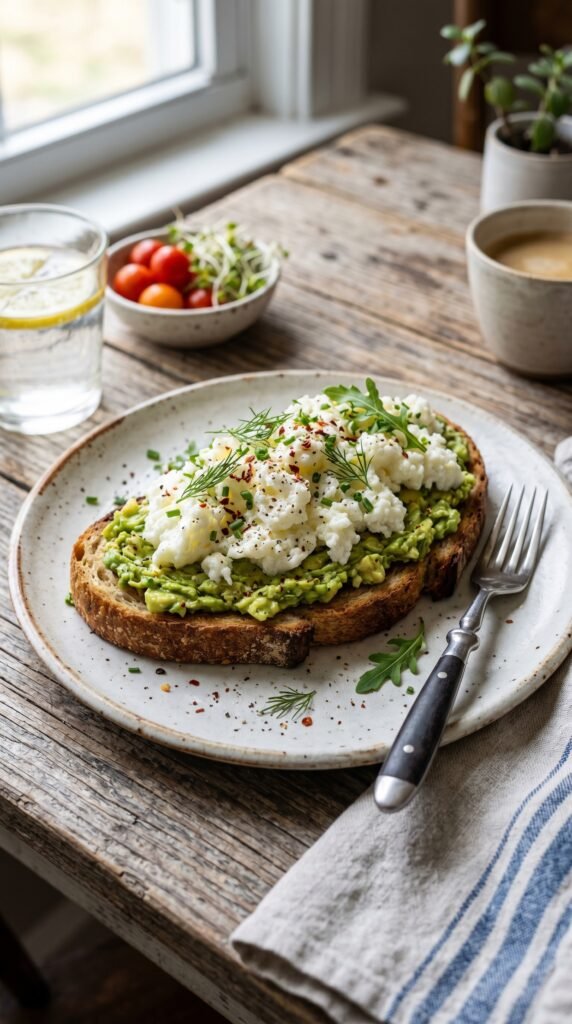
A lighter, smarter version of the avocado toast trend. Using egg whites and a thinner bread slice keeps this as a legitimate breakfast under 300 calories — without sacrificing any of the flavour.
Ingredients:
- 1 slice whole grain bread (~80 calories per slice)
- ¼ ripe avocado
- 3 egg whites, scrambled
- Squeeze of lemon juice
- Red pepper flakes, sea salt, black pepper
Instructions:
- Toast the bread to your liking.
- Mash avocado with lemon juice, salt, and pepper.
- Scramble egg whites in a pan over medium heat until just set.
- Spread avocado on toast, top with egg whites.
- Finish with red pepper flakes and serve immediately.
Calories per serving: ~265
💡 Tip: Look for “sandwich thin” style whole grain bread — many come in at 60–70 calories per slice, saving you another 10–20 calories.
8. Minimal Sugar Overnight Oats — 280 Calories
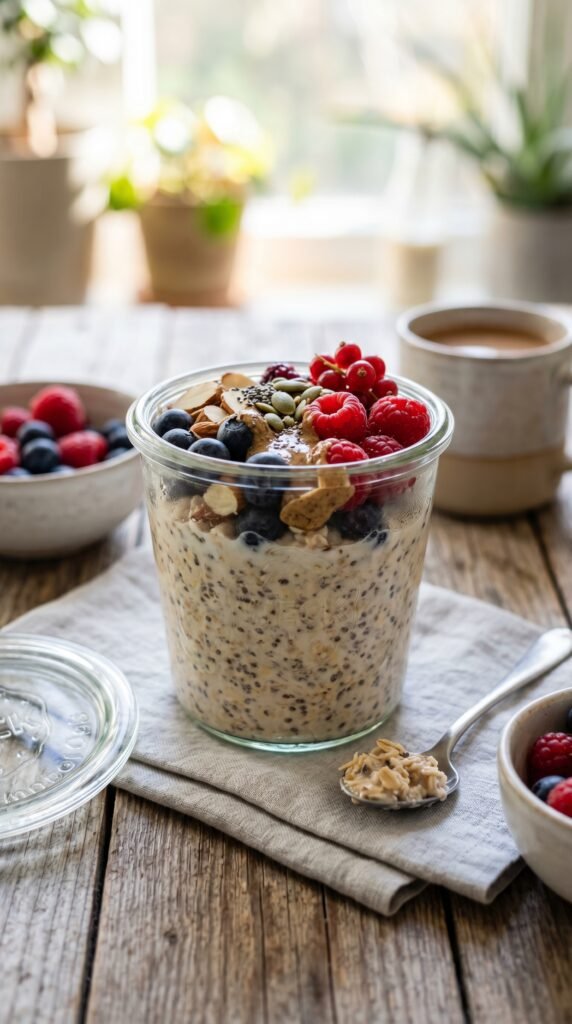
Most overnight oat recipes are secretly calorie bombs. This version is stripped back to the essentials — still creamy, still delicious, and genuinely one of the best low calorie breakfast ideas for prepping in advance.
Ingredients:
- ⅓ cup rolled oats
- ½ cup unsweetened almond milk
- 1 tablespoon chia seeds
- ¼ cup blueberries
- ½ teaspoon vanilla extract
- ¼ teaspoon cinnamon
Instructions:
- Combine oats, almond milk, chia seeds, vanilla, and cinnamon in a jar.
- Stir well to combine.
- Seal and refrigerate overnight or for at least 4 hours.
- Add blueberries in the morning.
- Stir before eating — add a splash of almond milk if too thick.
Calories per serving: ~280
💡 Tip: Don’t add sweetener — the blueberries and vanilla provide plenty of natural sweetness once the oats have absorbed the liquid.
9. Smoked Salmon Cucumber Rounds — 175 Calories
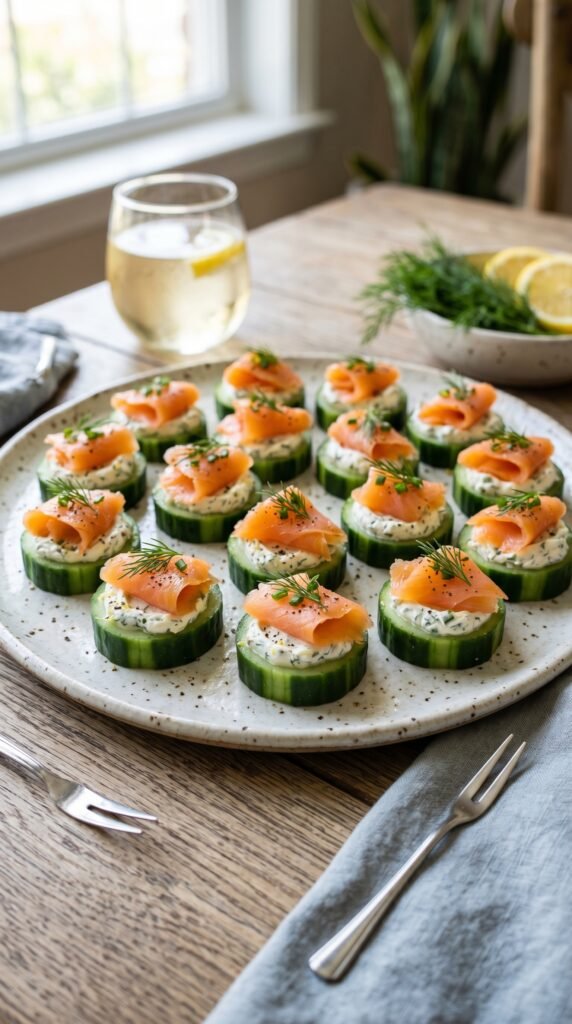
Elegant and impressive for something that takes under 5 minutes. These little bites are rich in omega-3s and protein, making them one of the most nutritionally powerful low calorie breakfast recipes under 300 calories on this list.
Ingredients:
- 2 oz smoked salmon
- ½ medium cucumber, sliced into thick rounds
- 2 tablespoons low-fat cream cheese
- Fresh dill
- Lemon juice and black pepper
Instructions:
- Arrange cucumber rounds on a plate.
- Spread a small amount of cream cheese on each round.
- Lay a small piece of smoked salmon on top.
- Squeeze lemon juice over everything.
- Garnish with fresh dill and black pepper.
Calories per serving: ~175
💡 Tip: These travel well — pack them in a container and enjoy them at your desk if you’re running out the door.
10. Green Protein Smoothie — 285 Calories
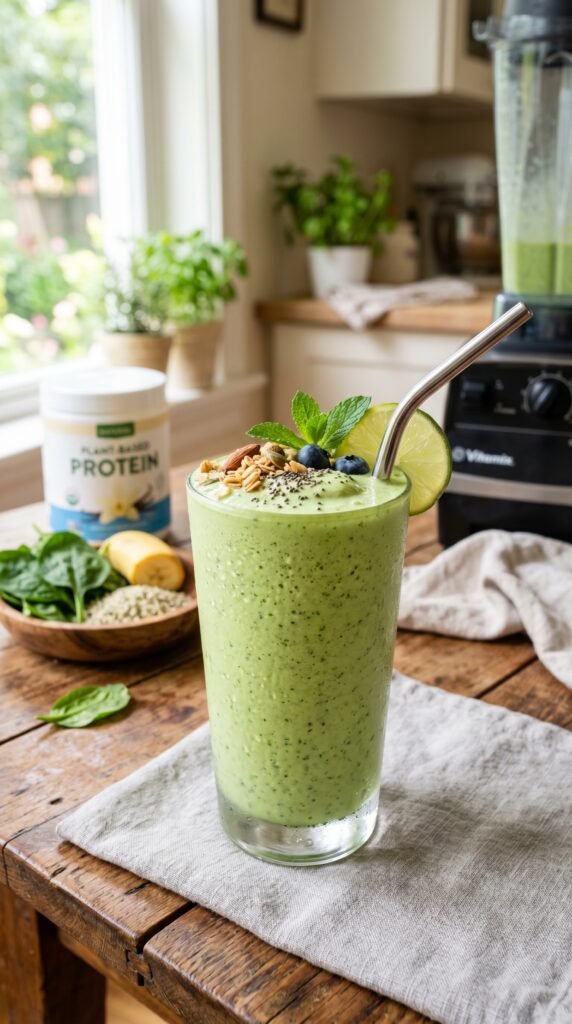
Don’t be put off by the colour. This is one of the most popular low calorie breakfast recipes under 300 calories in the fitness world — fast, filling, and the spinach is completely undetectable once blended.
Ingredients:
- 1 scoop vanilla protein powder (~120 cal)
- 1 large handful fresh spinach
- ½ frozen banana
- ¾ cup unsweetened almond milk
- ½ cup ice
Instructions:
- Add all ingredients to a blender.
- Blend on high for 45–60 seconds until silky smooth.
- Pour into a large glass and drink immediately.
Calories per serving: ~285
💡 Tip: Freeze your spinach ahead of time — it makes the smoothie colder and creamier without needing as much ice.
11. Apple Peanut Butter Rice Cakes — 245 Calories
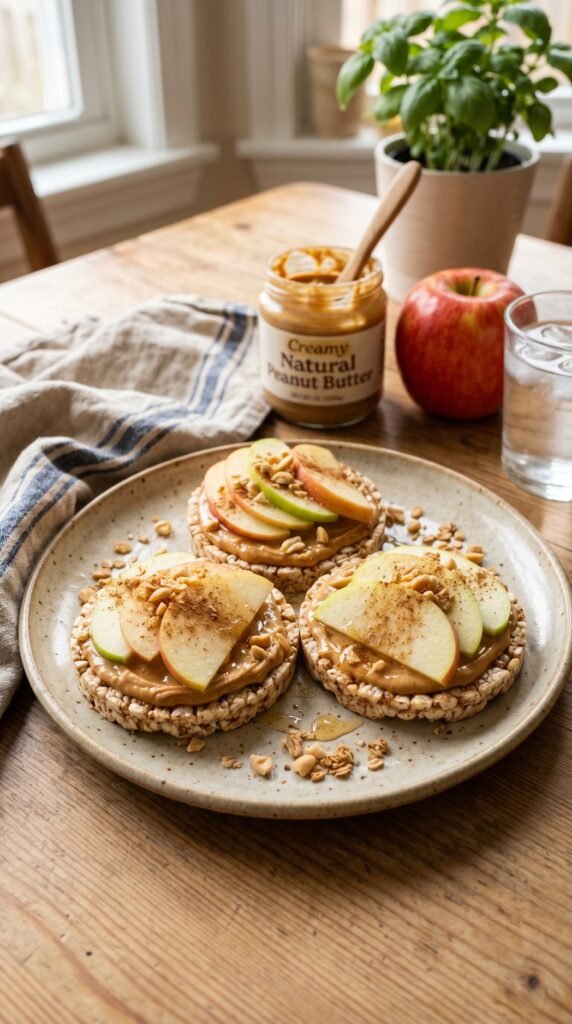
The fastest diet breakfast recipe on this entire list — zero cooking, zero washing up, and done in under two minutes. Perfect for the mornings when everything is running late.
Ingredients:
- 2 plain rice cakes (~35 calories each)
- 1 tablespoon natural peanut butter
- ½ small apple, thinly sliced
- Pinch of cinnamon
Instructions:
- Lay rice cakes flat on a plate or paper towel.
- Spread peanut butter evenly on both.
- Layer apple slices on top.
- Dust lightly with cinnamon.
- Eat immediately or pack to go.
Calories per serving: ~245
💡 Tip: Natural peanut butter (ingredients: peanuts + salt) is the only kind worth buying. Avoid versions with added sugar or palm oil.
12. Cinnamon Apple Microwave Oatmeal — 260 Calories
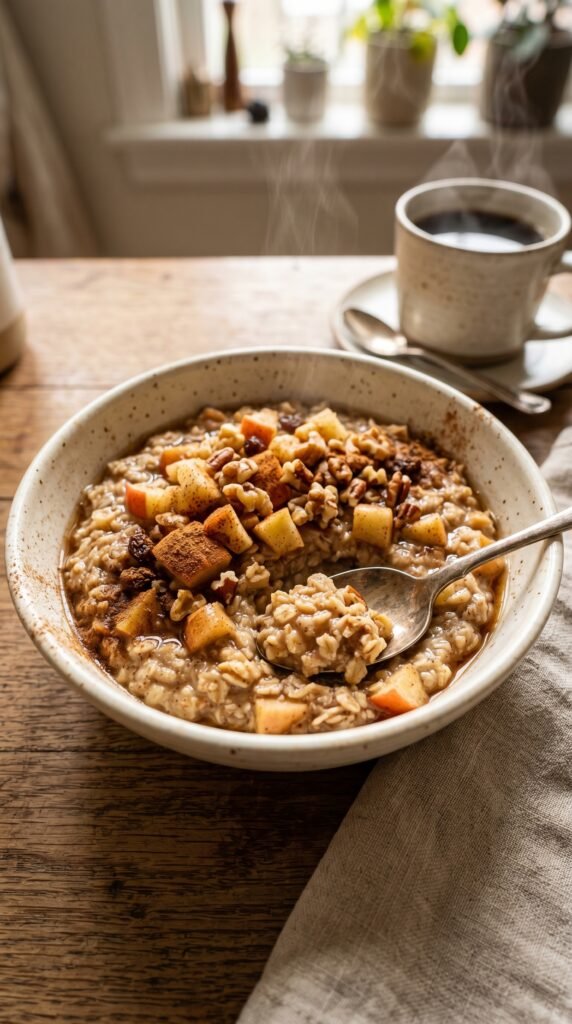
Hot, comforting, and done in under 3 minutes — this microwave oatmeal is the ideal healthy low calorie breakfast for cold mornings when you want something warm without any fuss.
Ingredients:
- ⅓ cup rolled oats
- ¾ cup water or unsweetened almond milk
- ½ small apple, finely diced
- ½ teaspoon cinnamon
- 1 teaspoon maple syrup
- Pinch of salt
Instructions:
- Combine oats and liquid in a large microwave-safe mug.
- Microwave on high for 2 minutes.
- Stir well, then add diced apple, cinnamon, maple syrup, and salt.
- Microwave for a further 30 seconds.
- Stir once more and allow to cool for 60 seconds before eating.
Calories per serving: ~260
💡 Tip: Always use a large mug — oats expand aggressively in the microwave and will overflow from a small one.
Tips to Keep Your Breakfast Low in Calories
Knowing what to cook is half the battle. The other half is knowing the habits that keep you consistently in that sub-300 zone without constantly second-guessing yourself.
Measure before you pour Peanut butter, granola, olive oil, and oats are easy to over-serve. A single heaped tablespoon of peanut butter instead of a level one can add 50+ calories you never intended. Use measuring spoons for the first few weeks until your eye is calibrated.
Choose plain, then add flavor yourself Flavored Greek yogurt, instant flavored oatmeal, and sweetened plant milks are loaded with added sugar. Plain versions cost the same and let you control exactly what goes in. Vanilla extract, cinnamon, and fresh fruit add flavor for almost no calories.
Use cooking spray instead of oil A teaspoon of olive oil is ~40 calories. A spritz of cooking spray is around 5. For scrambled eggs and omelettes, cooking spray works just as well. It’s one of the simplest swaps when optimizing low calorie breakfast recipes under 300 calories.
Build around protein first Decide on your protein source — eggs, Greek yogurt, cottage cheese, protein powder — and build everything else around it. Protein keeps you full the longest, making it the most valuable investment within a limited calorie budget.
Prep the night before Late nights and rushed mornings are where good intentions go to die. Three of the twelve recipes above require zero morning effort because they’re prepped the night before. Make that work for you.
Start with water Drink a large glass of water before breakfast every single morning. It supports digestion, can reduce appetite slightly, and costs zero calories. It’s a tiny habit that compounds meaningfully over weeks and months.
Common Mistakes That Add Hidden Calories
These are the quiet calorie creeps that catch even health-conscious people off guard. If your low calorie breakfast recipes under 300 calories aren’t producing the results you expect, one of these is probably why.
Pouring instead of measuring granola A “small handful” of granola can easily be ½ cup — which is 200–250 calories on its own. Pair that with full-fat yogurt and honey, and your “light” breakfast is pushing 500 calories before you’ve noticed.
Using whole milk in smoothies or coffee Whole milk has around 150 calories per cup. Swap for unsweetened almond or oat milk and you save 100–130 calories instantly, with no real difference in taste in most recipes.
Adding sweeteners on autopilot Honey, maple syrup, agave — they’re all essentially sugar. A generous drizzle can add 60–80 calories without you even thinking about it. Use sparingly and measure rather than pour.
Choosing “diet” packaged products Products labeled “light,” “low-fat,” or “diet” are often higher in sugar than their regular counterparts. The fat has been removed but sugar added to compensate for flavor. Always read the actual nutrition label — don’t trust the front of the packet.
Drinking calories alongside a low-calorie breakfast A large oat milk latte or a glass of orange juice alongside your 200-calorie bowl of oats can tip you over 400 calories before you’ve noticed. If you’re counting, count everything — including drinks.
Not enough protein This one doesn’t add calories — it costs you later. A breakfast without adequate protein will leave you hungry by 10 AM, leading to snacking that quickly exceeds what a proper breakfast would have cost. Protein is non-negotiable in any effective breakfast under 300 calories.
How to Build a Healthy Low Calorie Breakfast
Rather than following recipes rigidly every day, learning to build your own healthy low calorie breakfast gives you flexibility and long-term consistency. Here’s a simple formula:
Step 1: Choose a Protein Base (90–140 calories)
- 2 eggs (~140 cal)
- ¾ cup non-fat Greek yogurt (~90 cal)
- ½ cup cottage cheese (~90 cal)
- 1 scoop protein powder (~120 cal)
- 3 egg whites (~50 cal)
Step 2: Add a Fiber Source (40–80 calories)
- ⅓ cup rolled oats (~100 cal — keep portion small)
- ½ cup berries (~40 cal)
- 1 cup spinach or other greens (~10 cal)
- ½ apple (~45 cal)
- 2 tablespoons chia seeds (~120 cal — use 1 tbsp if pairing with other carbs)
Step 3: Add a Small Healthy Fat (40–80 calories)
- ¼ avocado (~60 cal)
- 1 tablespoon peanut or almond butter (~90 cal — use ½ tbsp to stay low)
- 1 tablespoon sunflower or pumpkin seeds (~50 cal)
Step 4: Season and Flavor (0–20 calories)
- Cinnamon, vanilla extract, lemon juice, fresh herbs — virtually free
- 1 teaspoon honey or maple syrup (~20 cal)
- Salt, pepper, red pepper flakes — zero calories
When you follow this structure, almost every combination you come up with will naturally fall into the low calorie breakfast recipes under 300 calories range. Therefore, you’re not locked into a script — you have a framework.
FAQs About Low Calorie Breakfast Recipes Under 300 Calories
Q1: Can 300 calories really keep me full until lunch?
Yes — if those 300 calories include adequate protein and fiber. A breakfast with 20g of protein and 6g+ of fiber can genuinely hold hunger for 3–4 hours. The recipes in this article are specifically designed to maximize satiety within the calorie limit. However, if you’re very active or have a high daily calorie target, a mid-morning snack of 100–150 calories (like an apple with a tablespoon of nut butter) is a sensible addition.
Q2: Are these low calorie breakfast recipes under 300 calories suitable for diabetics?
Many of these recipes are well-suited for blood sugar management because they’re high in protein and fiber with minimal added sugar. However, individual needs vary significantly. If you have Type 1 or Type 2 diabetes, speak with your healthcare provider or registered dietitian before making significant changes to your diet.
Q3: Is it better to eat these breakfasts or skip breakfast entirely?
For most people, eating a nutritious breakfast supports better appetite control and healthier choices throughout the day. That said, if you follow intermittent fasting intentionally and it works for you, that’s valid. The key word is intentionally. Randomly skipping breakfast because you’re busy or “trying to save calories” tends to result in poor choices later — not actual calorie savings.
Q4: How many of these low calorie breakfast recipes under 300 calories can I eat per day?
These recipes are designed as single-serving breakfasts. You’d eat one per morning, not multiple. If you’re still hungry after one of these meals, the most likely reasons are insufficient protein, insufficient sleep, or not drinking enough water — not portion size.
Q5: Can I eat these recipes if I’m not trying to lose weight?
Absolutely. Many of these are simply excellent, nutritious breakfasts regardless of your calorie goals. If you’re maintaining weight or eating at a higher calorie target, simply add to these recipes — an extra egg, a larger portion of oats, or some additional nut butter — rather than treating them as fixed.
Q6: What’s the single best option from this list for someone with no time at all?
The apple peanut butter rice cakes. No cooking, no prep, no mess, no dishes — and it’s done in under two minutes. It’s genuinely one of the most practical low calorie breakfast ideas for chaotic mornings.
Q7: Will I lose weight just by changing my breakfast?
Breakfast alone won’t produce dramatic weight loss, but it sets the tone for your entire day — and a good tone compounds. Consistently choosing low calorie breakfast recipes under 300 calories that are protein-rich and nutritious will reduce your overall daily calorie intake, improve your food choices at other meals, and make your weight-loss efforts significantly more effective.
Conclusion
Here’s what all of this comes down to: losing weight doesn’t require suffering through tasteless food or skipping the most important meal of the day. It requires making smarter choices — consistently, realistically, and without making breakfast feel like a punishment.
Every recipe in this article is a low calorie breakfast recipe under 300 calories that you can actually look forward to eating. They’re affordable, made from ingredients you can find in any supermarket, and quick enough for real morning schedules.
The goal isn’t perfection. It’s progress. One better breakfast becomes two. Two becomes a habit. A habit becomes a result.
Start with a single recipe this week. Maybe it’s the overnight chia pudding you prep tonight. Maybe it’s the two-ingredient banana pancakes tomorrow morning. Whatever it is — just start.
Your body responds to consistent small changes in a big way. A smarter breakfast is one of the simplest, most powerful places to begin.
You’ve got the recipes. You’ve got the knowledge. You’ve got no excuse to not make tomorrow morning a little bit better than today. 🌱
Save this article, share it with someone who needs it, and revisit it whenever you need fresh inspiration. Your best mornings start here.