
Introduction
You eat well. You move your body. You try to make smart choices. But the scale barely shifts — and you’re constantly tired, bloated, and frustrated.
Sound familiar? For millions of people, the real problem isn’t effort. It’s metabolism.
A sluggish metabolism can quietly work against you, no matter how disciplined you are. It affects how fast your body burns calories, how much energy you have throughout the day, and how efficiently you shed unwanted fat.
The good news? You don’t need expensive supplements, extreme diets, or hours at the gym to fix it. Understanding how to boost metabolism naturally is simpler than most people think — and the results can be genuinely life-changing.
In this article, you’ll get 10 practical, beginner-friendly ways to how to boost metabolism naturally — backed by real science and built for real life. Whether you want more energy, better digestion, or faster fat loss, this guide has you covered.
Let’s dive in.
⚡ Quick Summary
Key takeaways from this article:
- What metabolism actually is and why it slows down
- 10 simple, actionable strategies for how to boost metabolism naturally
- The best foods, habits, and exercises for a faster metabolism
- Common myths and mistakes that could be sabotaging your results
- Answers to the most frequently asked metabolism questions
What Is Metabolism and Why It Matters
Before we talk about how to fix something, it helps to understand what it is.
Metabolism is the sum of all chemical processes your body uses to convert food and drink into energy. Even when you’re sitting completely still, your body is burning calories — powering your heart, lungs, brain, and every cell that keeps you alive. This baseline calorie burn is called your basal metabolic rate (BMR).
Here’s why it matters for weight loss: if your BMR is high, you burn more calories at rest. If it’s low, your body holds onto fat more easily — even when you’re eating sensibly and exercising regularly.
Several factors influence your metabolic rate:
- Age — Metabolism naturally slows with age, particularly after 30
- Muscle mass — Muscle burns more calories than fat, even at rest
- Hormones — Thyroid, insulin, and cortisol all play a role
- Sleep — Poor sleep dramatically slows metabolic function
- Diet history — Chronic calorie restriction can suppress metabolism over time
The encouraging thing? Most of these factors are at least partially within your control. That’s exactly what learning how to boost metabolism naturally is all about.
How to Boost Metabolism Naturally: The Basics
Before getting into the specific strategies, it’s worth understanding what “natural” metabolism boosting actually means.
Knowing how to boost metabolism naturally isn’t about hacks or shortcuts. It’s about consistently supporting your body’s biological systems — through food, movement, sleep, and daily habits — so that your metabolism runs at its full potential.
There’s no single magic tip that transforms everything overnight. However, when you combine several of these evidence-based strategies together, the cumulative effect is powerful and lasting.
Think of your metabolism like a fire. A single log doesn’t create much heat. But stack the right logs the right way, feed it regularly, and give it enough air — and you get a steady, powerful burn that lasts for hours.
That’s how to boost metabolism naturally: building the right conditions for your body to thrive.
10 Simple Ways to Boost Metabolism Naturally
This is the core of what you came for. Each of these strategies is simple, realistic, and genuinely effective. Used together, they represent the best roadmap for how to boost metabolism naturally without spending a fortune or overhauling your entire life.
1. Eat Enough Protein at Every Meal

Protein is one of the most powerful metabolism tools available — and most people aren’t eating nearly enough of it.
When you eat protein, your body uses significantly more energy to digest it than it does for carbohydrates or fat. This is called the thermic effect of food (TEF). Protein has a TEF of around 20–30%, meaning your body burns 20–30 calories for every 100 calories of protein you eat. Compare that to fat, which has a TEF of just 0–3%.
Practical examples:
- Add 2 eggs or Greek yogurt to your breakfast
- Include chicken, fish, tofu, or legumes at lunch and dinner
- Snack on cottage cheese, edamame, or a small handful of mixed nuts
In addition to its thermic effect, protein preserves and builds lean muscle mass — which itself burns more calories 24 hours a day. It’s one of the foundational answers to how to boost metabolism naturally.
2. Don’t Skip Breakfast (Eat Within 1–2 Hours of Waking)

Your metabolism responds to signals. One of the strongest signals you can send it in the morning is food.
Eating a nutritious breakfast soon after waking tells your metabolic systems to “switch on” and start burning efficiently. Skip it, and your body may interpret that as a food-scarce environment — slowing its burn rate to conserve energy.
Research shows that people who eat breakfast regularly tend to have higher metabolic rates and lower overall daily calorie intake than those who skip it.
What to eat: A balanced breakfast with protein, fiber, and healthy fat works best. Think eggs with vegetables, Greek yogurt with berries and chia seeds, or overnight oats with nut butter.
This is a simple but powerful approach to how to boost metabolism naturally — right from the moment you wake up.
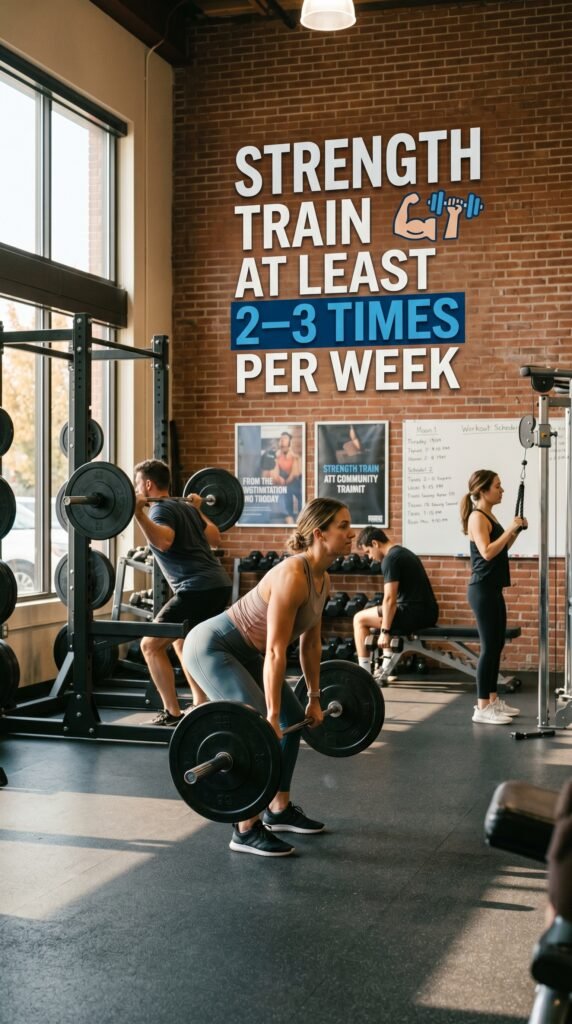
3. Strength Train at Least 2–3 Times Per Week
Of all the exercise types available, strength training is the single most effective for long-term metabolic rate improvement.
Here’s why: muscle tissue is metabolically expensive. It burns approximately 6–10 calories per pound per day, even at rest. Fat tissue burns almost nothing by comparison. Therefore, the more lean muscle you carry, the higher your resting metabolic rate — permanently.
You don’t need to lift heavy or spend hours at the gym:
- 30-minute bodyweight workouts at home count
- Resistance band exercises are highly effective
- Even consistent dumbbell training 2–3 times per week produces measurable results within weeks
If you want to know how to boost metabolism naturally in a lasting, structural way — strength training is your most powerful lever.
4. Stay Hydrated Throughout the Day

This one surprises people. Water has a direct, measurable effect on metabolic rate.
Studies show that drinking 500ml (about 17 oz) of cold water can temporarily increase metabolism by 24–30% for 60–90 minutes. This happens because your body uses energy to heat the water to body temperature — a process called water-induced thermogenesis.
Beyond that, even mild dehydration reduces the efficiency of virtually every metabolic process. Your body runs slower. You feel more fatigued. And fat metabolism in particular becomes less efficient when you’re not adequately hydrated.
Simple habits that help:
- Start every morning with a large glass of water before coffee or food
- Keep a water bottle visible on your desk as a constant reminder
- Eat water-rich foods like cucumber, tomatoes, watermelon, and leafy greens
Hydration is one of the most underrated metabolism boosting tips you’ll find — and it costs nothing.
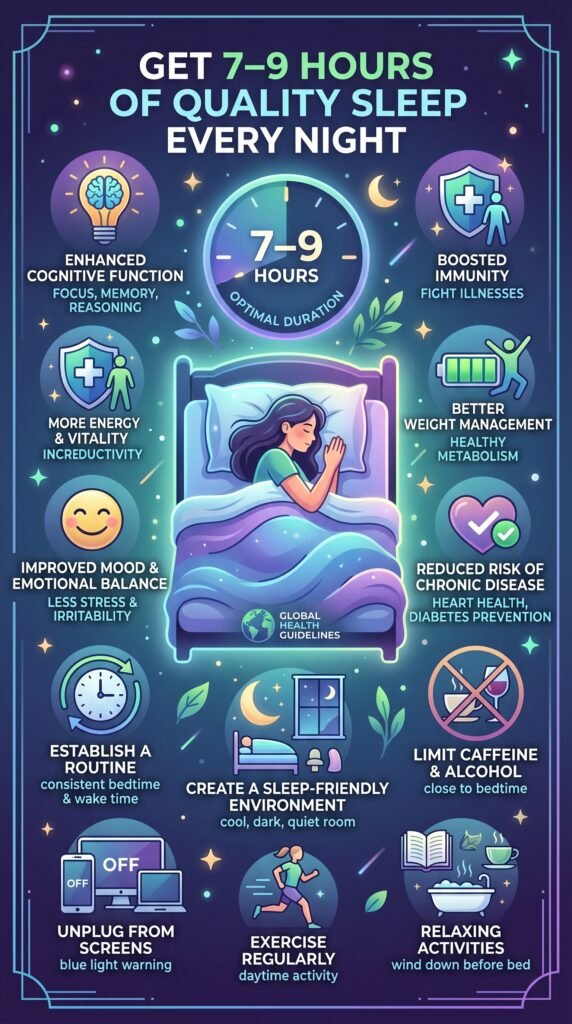
5. Get 7–9 Hours of Quality Sleep Every Night
Sleep might be the single most overlooked metabolic factor of all.
When you don’t sleep enough, your body produces more cortisol (the stress hormone) and less leptin (the satiety hormone). This combination slows fat burning, increases hunger, and encourages your body to store fat — particularly around the belly.
Research is clear: just a few nights of poor sleep can measurably suppress metabolic rate and alter the way your body processes glucose and insulin.
Practical sleep improvements:
- Keep a consistent bedtime and wake time, even on weekends
- Avoid screens for 45–60 minutes before bed
- Keep your bedroom cool (between 16–19°C / 60–67°F) — cooler temperatures support better sleep and slightly boost calorie burn
- Avoid caffeine after 2 PM
If you’re serious about how to boost metabolism naturally, prioritizing sleep is non-negotiable.
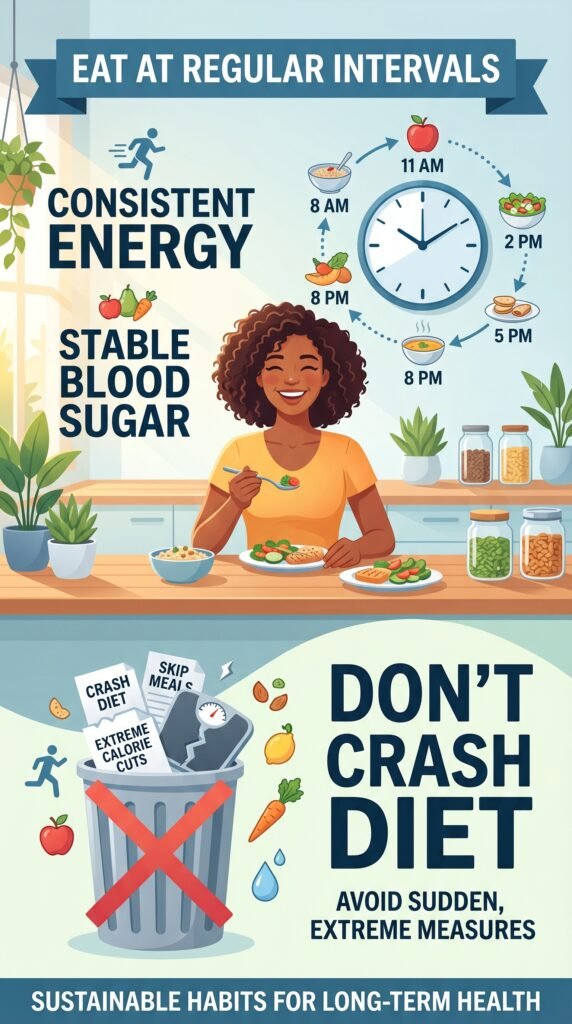
6. Eat at Regular Intervals and Don’t Crash Diet
Your metabolism is adaptive. It adjusts based on the patterns you give it.
Eating at consistent intervals signals to your body that food is reliably available, which keeps metabolic rate stable. Crash dieting or dramatically slashing calories does the opposite — it triggers a survival response that slows your metabolism to match your reduced intake, a phenomenon called metabolic adaptation.
This is why so many people lose weight quickly on extreme diets, then plateau — and regain weight rapidly when they stop. Their metabolism has down-regulated in response.
A healthier approach:
- Eat 3 balanced meals per day at consistent times
- Don’t go below 1,200 calories (for women) or 1,500 calories (for men) without medical supervision
- If you want to reduce calories, aim for a modest deficit of 200–400 calories rather than a dramatic cut
Understanding this is a crucial part of how to boost metabolism naturally — it’s not just what you eat, but the consistency of when you eat it.
7. Add Metabolism-Boosting Foods to Your Diet

Certain foods have documented thermogenic or metabolic effects. While no single food is a miracle, incorporating several of these regularly can make a real difference.
Foods that support a faster metabolism:
- Green tea — Contains EGCG (epigallocatechin gallate), a catechin shown to modestly increase fat oxidation
- Coffee (black) — Caffeine stimulates the central nervous system and temporarily increases metabolic rate by 3–11%
- Chili peppers — Capsaicin creates a mild thermogenic effect and can slightly reduce appetite
- Ginger — Shown to increase thermogenesis and reduce feelings of hunger
- Apple cider vinegar — May improve insulin sensitivity and modestly support fat metabolism
- Legumes — High protein and fiber content increases the thermic effect of digestion
None of these are dramatic on their own. But used consistently as part of a balanced diet, they contribute meaningfully to how to boost metabolism naturally over time.
🔗 See also: 10 Healthy Breakfast Recipes for Weight Loss That Actually Work
8. Move More Throughout the Day (Not Just During Workouts)
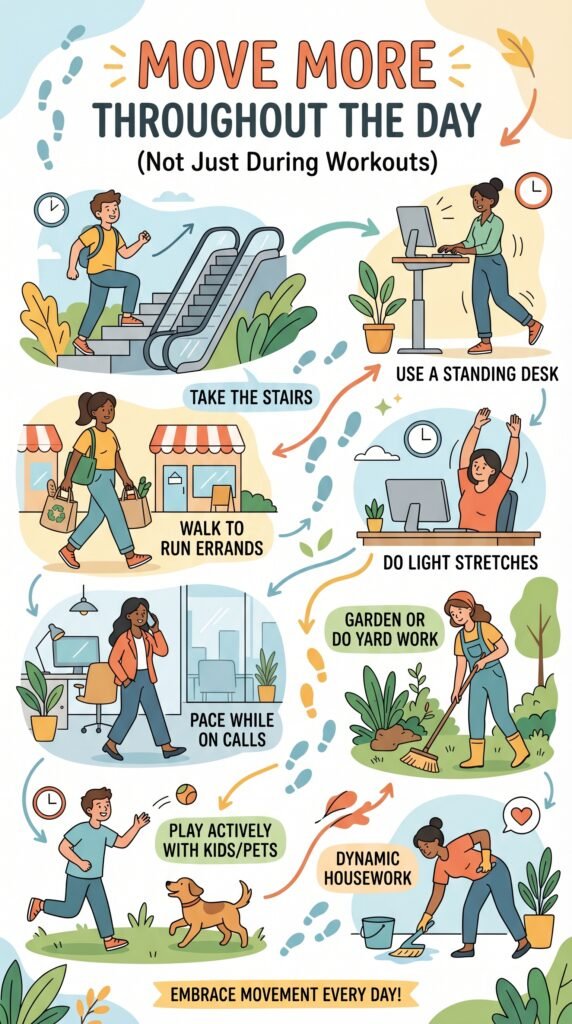
Exercise is important — but the movement you do outside of structured workouts matters just as much.
This is called NEAT (Non-Exercise Activity Thermogenesis) — the calories your body burns through everyday movement like walking, standing, fidgeting, housework, and taking the stairs. For many people, NEAT accounts for more daily calorie burn than formal exercise does.
The problem? Modern sedentary lifestyles have crushed NEAT. Most people sit for 8–10+ hours per day, then wonder why their metabolism feels stuck.
Simple ways to increase NEAT:
- Take a 10-minute walk after each meal
- Stand for at least 30 minutes of every hour if you work at a desk
- Take stairs whenever possible
- Walk or cycle for short errands instead of driving
- Do light stretching or pacing during phone calls
Building daily movement into your routine is one of the most practical metabolism boosting tips there is — no gym membership required.
9. Manage Stress Actively
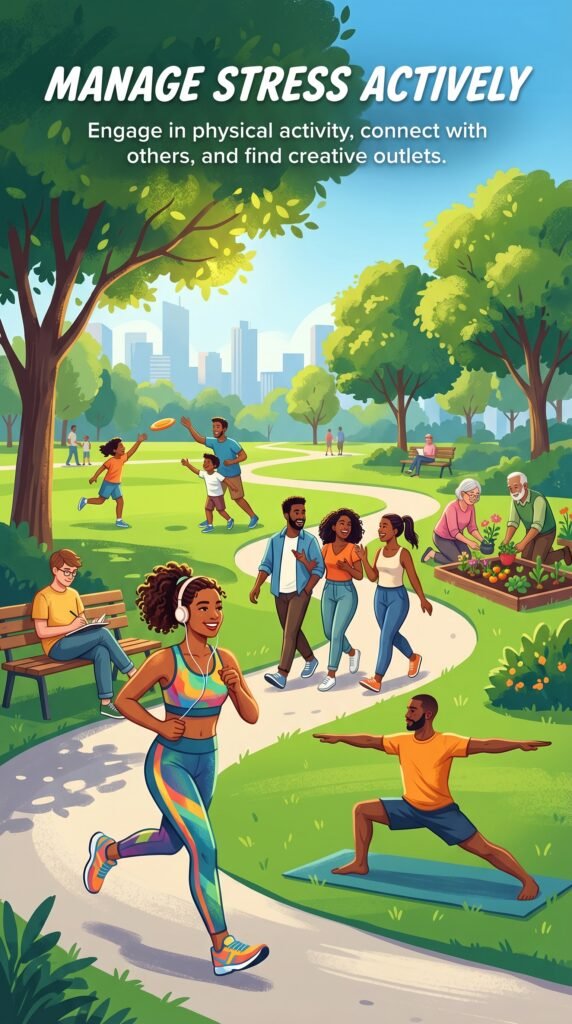
Chronic stress is a metabolic villain.
When stress is persistently high, cortisol levels stay elevated. Chronic cortisol does several damaging things to your metabolism: it increases fat storage (especially visceral belly fat), breaks down muscle tissue, disrupts sleep, increases sugar cravings, and reduces insulin sensitivity.
In other words, stress actively works against almost everything you’re trying to achieve when you learn how to boost metabolism naturally.
Practical stress management strategies:
- 10 minutes of morning meditation or deep breathing
- Regular outdoor walks (nature has a measurable cortisol-lowering effect)
- Journaling before bed to clear mental noise
- Reducing caffeine if you’re already anxious or overstimulated
- Saying no to obligations that consistently drain you
This isn’t “soft” advice — it’s biological. Managing stress is a direct, evidence-based approach to how to boost metabolism naturally through hormonal balance.
10. Try Intermittent Fasting (Strategically, Not Aggressively)
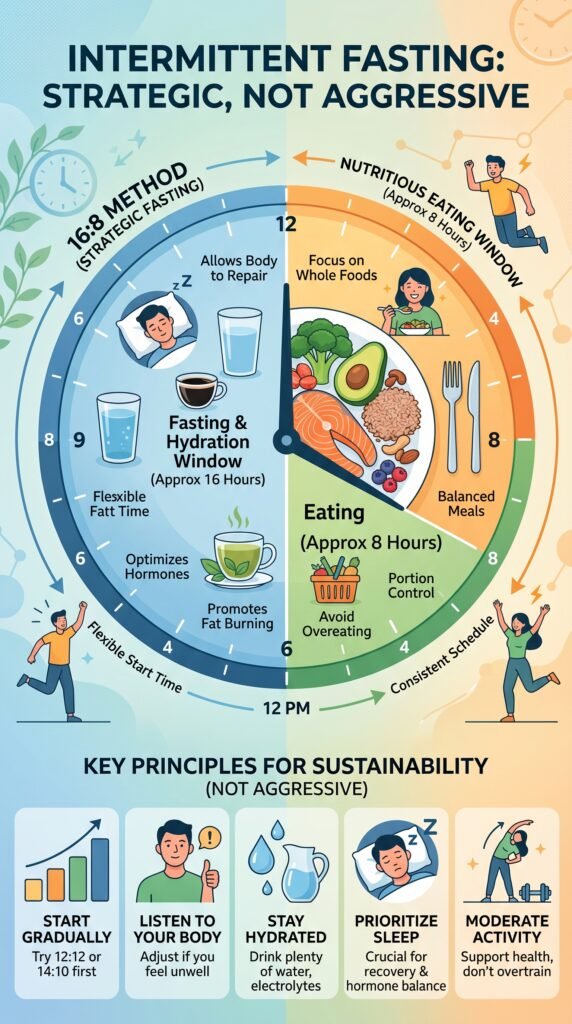
Intermittent fasting (IF) is one of the more controversial metabolism topics — and it deserves a nuanced take.
Done well, short-term fasting (like a 16:8 eating window) can actually increase metabolic rate temporarily. This is partly due to norepinephrine release during fasting states, which tells fat cells to break down fat for energy. Short fasts also help improve insulin sensitivity, which supports efficient glucose metabolism.
However, prolonged or aggressive fasting can have the opposite effect — triggering metabolic adaptation and muscle breakdown.
The sweet spot for most people:
- A 12–16 hour overnight fast (e.g., eating between 8 AM and 8 PM) is manageable and beneficial for most people
- Breaking the fast with a protein-rich meal is essential
- Avoid fasting longer than 18 hours without guidance, particularly if you’re very active
Used thoughtfully, intermittent fasting is a legitimate strategy for how to boost metabolism naturally — particularly when combined with strength training and adequate protein.
Boost Metabolism Naturally: Lifestyle Habits That Work
Beyond individual tactics, the people who successfully boost metabolism naturally for the long term share a few common lifestyle patterns:
- They move consistently throughout the day, not just during workouts
- They sleep with intention — not just collapsing into bed exhausted
- They eat regular, balanced meals rather than swinging between restriction and overeating
- They manage stress as actively as they manage their diet
- They stay hydrated without relying on caffeine to compensate for dehydration
- They build muscle through resistance training and protect it through adequate protein
None of these are dramatic. None require a perfect lifestyle. But practiced consistently over weeks and months, they create the metabolic environment where fat loss becomes natural rather than forced.
Increase Metabolism Naturally with Food and Diet
Diet has an enormous influence on your metabolic rate — not just through calories, but through the types of foods you choose and how they affect your hormones and gut health.
To increase metabolism naturally through diet, focus on:
- Prioritizing whole foods over processed ones — whole foods require more energy to digest
- Eating adequate fiber — supports gut health, which is increasingly linked to metabolic rate and weight regulation
- Including iron-rich foods (spinach, lentils, lean red meat) — iron deficiency is a common, often undiagnosed cause of fatigue and slow metabolism
- Getting enough iodine — iodine supports thyroid function, which directly regulates metabolic rate. Good sources include seaweed, eggs, dairy, and iodized salt
- Avoiding ultra-processed foods — these are designed to be easy to digest, which actually reduces their thermic effect and contributes to metabolic sluggishness
🔗 See also: 15 High Protein Breakfast Ideas to Start Your Day Strong
How to Speed Up Metabolism Through Exercise
Exercise is one of the most powerful tools for how to speed up metabolism — but the type of exercise matters significantly.
Strength training (as covered above) is the gold standard for long-term metabolic rate improvement because it builds muscle.
However, High-Intensity Interval Training (HIIT) also deserves a mention. HIIT involves short bursts of intense effort followed by brief rest periods. Its primary metabolic benefit is something called EPOC (Excess Post-Exercise Oxygen Consumption) — commonly known as the “afterburn effect.”
After a HIIT session, your body continues burning calories at an elevated rate for up to 24 hours as it recovers and returns to homeostasis.
A balanced exercise week for metabolism might look like:
- 2–3 strength training sessions (30–45 minutes each)
- 1–2 HIIT sessions (20–25 minutes is enough)
- Daily walking or low-intensity movement (NEAT)
- At least 1 full rest or active recovery day
Knowing how to speed up metabolism through exercise isn’t just about burning calories during the workout — it’s about creating the conditions where your body burns more at all times.
Metabolism Boosting Tips That Actually Work: Myths vs Facts
There’s a lot of misinformation out there. Let’s quickly separate fact from fiction.
MYTH: Eating 6 small meals a day dramatically boosts metabolism FACT: Total daily calorie intake matters far more than meal frequency. There’s no strong evidence that 6 meals produces a significantly higher metabolic rate than 3. Eat whatever frequency is sustainable for you.
MYTH: Certain supplements can dramatically boost your metabolism FACT: Most metabolism supplements are poorly regulated and largely ineffective. Green tea extract, caffeine, and capsaicin have modest, real effects — but they’re available in whole food form and don’t need to come in a $60 bottle.
MYTH: Cardio is the best exercise for boosting metabolism FACT: Cardio burns calories during the workout but does little for resting metabolic rate. Strength training produces lasting metabolic benefits by building muscle. Both have a role, but strength training wins for long-term metabolic health.
MYTH: You can’t change your metabolism — it’s genetic FACT: Genetics influence metabolism, but so do your habits, and habits are within your control. These metabolism boosting tips work regardless of your genetic starting point.
Common Mistakes That Slow Down Metabolism
Even well-intentioned people make these errors. If your results have stalled, one of these could be why:
Eating too little: Severe calorie restriction triggers metabolic adaptation. Your body becomes more efficient at running on fewer calories — which sounds good but actually means burning less.
Not eating enough protein: Without adequate protein, you lose muscle mass over time. Less muscle = slower resting metabolism. Most adults need 1.2–1.6g of protein per kilogram of body weight daily.
Skipping resistance training: Relying entirely on cardio is a common mistake. Without strength training, you’re not building the metabolic tissue (muscle) that drives long-term calorie burn.
Chronic poor sleep: Even two or three nights of insufficient sleep measurably suppresses metabolic rate and increases fat-storing hormones.
Living a sedentary life outside the gym: One hour at the gym doesn’t offset eight hours of sitting. Daily movement (NEAT) is crucial.
Chronic stress with no management strategy: Ongoing elevated cortisol actively prevents fat loss and suppresses metabolic efficiency.
FAQs: How to Boost Metabolism Naturally
Q1: How long does it take to see results when you boost metabolism naturally?
Most people notice improved energy within 1–2 weeks of making consistent changes. Measurable fat loss and body composition changes typically become visible after 4–8 weeks of combining several strategies. Metabolism is not transformed overnight, but the changes are cumulative and lasting when approached correctly.
Q2: Can I boost metabolism naturally without exercise?
Yes — to a degree. Diet, sleep, hydration, stress management, and meal timing all influence metabolism independently of exercise. However, for the most significant and lasting results, combining dietary changes with strength training is the most effective approach for how to boost metabolism naturally.
Q3: Does drinking cold water really boost metabolism?
Yes, modestly. Drinking cold water forces your body to expend energy to warm it, temporarily increasing metabolic rate. Drinking 500ml of cold water has been shown to increase metabolism by approximately 24–30% for up to 90 minutes. It’s a small effect, but a real one — and staying well hydrated supports overall metabolic function significantly.
Q4: Is a slow metabolism the reason I can’t lose weight?
It might be a contributing factor, but it’s rarely the sole cause. Other common reasons include eating more calories than you realize, insufficient protein intake, poor sleep, high stress levels, and inadequate resistance training. Addressing all of these simultaneously — which is essentially the roadmap for how to boost metabolism naturally — tends to produce results even when a “slow metabolism” is blamed.
Q5: Are metabolism-boosting supplements worth it?
Most are not worth the cost. Caffeine, green tea extract, and capsaicin have small but real metabolic effects — but these are best consumed through coffee, green tea, and chili peppers rather than expensive pills. There is no supplement that comes close to replicating the metabolic benefit of adequate sleep, protein intake, and regular resistance training.
Q6: Does age permanently slow metabolism?
Age does reduce metabolic rate — primarily because people tend to lose muscle mass as they age. However, the muscle loss itself is largely preventable through consistent resistance training and adequate protein intake. Many older adults who maintain these habits have metabolic rates comparable to much younger people.
Conclusion
Your metabolism isn’t your enemy. It’s a responsive, adaptable system that changes based on how you treat it — and that’s incredibly empowering.
You now have a clear, practical roadmap for how to boost metabolism naturally: eat enough protein, sleep consistently, build muscle, move throughout the day, stay hydrated, manage stress, and fuel your body with the right foods. None of these require a gym membership you’ll never use or a diet that makes you miserable.
Start with two or three strategies this week. Add more as they become habits. Be patient — metabolic change takes weeks, not days, and consistency matters far more than perfection.
The most important thing is to begin. One better choice today becomes two tomorrow. That momentum builds into a body that works with you rather than against you.
You now know exactly how to boost metabolism naturally. The only thing left to do is act on it.
Your faster, more energized, stronger self is waiting. Go get it. 🔥