
Why Does Your Body Burn More Calories Than Your Friend’s?
Have you ever wondered why some people seem to eat anything they want without gaining a pound, while others gain weight just by looking at a slice of cake? Or why do you feel energized all day long, while someone else is exhausted by noon?
The answer almost always comes back to one word: metabolism.
Most people have heard the term, but very few actually understand what it means — or more importantly, how to use that knowledge to feel better, lose weight, or have more energy.
In this guide, we’re going to break it all down. No complicated science jargon. No confusing charts. Just clear, simple, actionable information that will help you finally understand what metabolism is and what you can do about it.
⚡ Quick Summary
- What is metabolism? It’s the set of chemical processes your body uses to convert food into energy.
- Your body burns calories even while you sleep (this is called your basal metabolic rate).
- Age, muscle mass, hormones, and lifestyle all affect how fast or slow your metabolism is.
- You can boost metabolism naturally through diet, exercise, sleep, and hydration.
- A “slow metabolism” isn’t a life sentence — small daily changes make a big difference.
What Is Metabolism?
Let’s start with the basics. What is metabolism? In the simplest terms, metabolism is the engine that keeps your body running.
Every second of every day — whether you’re running a marathon or lying on your couch — your body is working. It’s pumping blood, breathing, repairing cells, digesting food, and sending signals through your nervous system. All of that work requires energy. And metabolism is the process your body uses to produce that energy from the food you eat.
Think of it like a furnace. The food you eat is the fuel. Your metabolism is the fire that burns it. The faster the fire burns, the more fuel (calories) it uses. The slower it burns, the less fuel it needs — and the more gets stored as fat.
So when people say “I have a slow metabolism,” what they really mean is: their body doesn’t burn through energy very quickly. And when someone has a “fast metabolism,” their body is like a high-performance engine — always burning, always demanding more fuel.
Understanding what is metabolism is the first step to taking control of your health.
Metabolism Definition and Function: The Science Made Simple
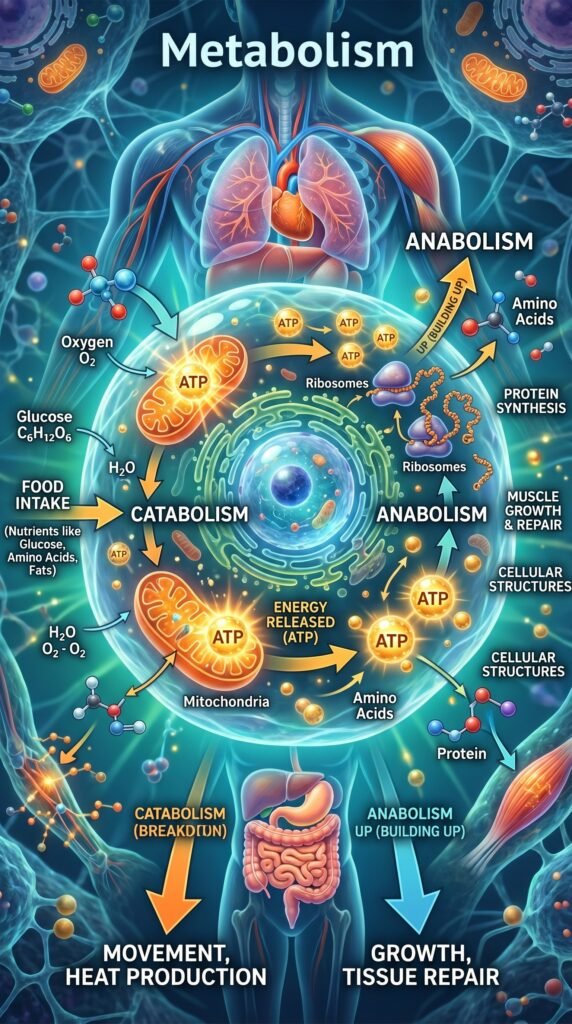
Here’s a more complete metabolism definition and function: metabolism refers to all the chemical reactions happening inside your cells that keep you alive and functioning.
These reactions fall into two main categories:
1. Catabolism (Breaking Down)
This is the destructive side of metabolism — in a good way. Catabolism breaks down large molecules (like the carbohydrates, proteins, and fats in your food) into smaller ones, releasing energy in the process. When you digest a meal, catabolism is doing the work.
2. Anabolism (Building Up)
This is the constructive side. Anabolism uses that released energy to build and repair things — new cells, muscle tissue, hormones, enzymes, and more. When your body heals a wound or builds muscle after a workout, that’s anabolism at work.
Together, catabolism and anabolism make up the full metabolism definition and function of your body. They’re constantly working in balance, 24 hours a day, 7 days a week.
One more important term to know: Basal Metabolic Rate (BMR). This is the number of calories your body needs to function at rest — just to keep your heart beating and your lungs breathing. Your BMR makes up about 60–70% of all the calories you burn in a day, even if you never exercise.
How Metabolism Works: A Step-by-Step Look
Now let’s talk about how metabolism works in real life — from the moment you take a bite of food to the moment your body turns it into usable energy.
Step 1: You eat food. Food enters your stomach and small intestine, where digestive enzymes break it down into its basic components — glucose (from carbs), amino acids (from protein), and fatty acids (from fat).
Step 2: Nutrients enter your bloodstream. These smaller molecules pass through the lining of your intestines into your blood, which carries them to cells throughout your body.
Step 3: Cells convert nutrients into energy. Inside each cell, tiny structures called mitochondria take those nutrients and convert them into ATP (adenosine triphosphate) — the actual energy currency your body uses for everything it does. This is the core of how metabolism works.
Step 4: Leftover energy gets stored. If you consume more energy than your body needs right now, the excess doesn’t disappear. It gets stored — as glycogen in your liver and muscles (for short-term use), or as body fat (for long-term storage).
Step 5: Energy gets used. Your body uses that stored energy between meals, during exercise, or overnight while you sleep. The faster your metabolic rate, the more energy you burn even when you’re not active.
That’s the full cycle. Simple, right? Understanding what is metabolism helps you see why what you eat — and when you eat it — can make such a big difference.
Factors That Affect Your Metabolism
Not everyone’s metabolism runs at the same speed. Several factors influence how quickly or slowly your body burns energy:
Age
As you get older, your metabolism naturally slows down. After age 30, most people lose a small amount of muscle mass each year, which reduces how many calories they burn at rest. This is one reason it becomes harder to maintain weight as you age.
Muscle Mass
Muscle tissue is metabolically active — it burns calories even when you’re sitting still. Fat tissue, on the other hand, burns very few calories at rest. This is why people with more muscle tend to have faster metabolisms, and why strength training is so powerful for weight management.
Genetics
Yes, some people are genetically predisposed to faster or slower metabolisms. Your genes influence everything from your thyroid function to how efficiently your mitochondria work. However, genetics is not destiny — lifestyle choices still play a massive role.
Hormones
Thyroid hormones, insulin, cortisol, and sex hormones (like estrogen and testosterone) all influence metabolic rate. Conditions like hypothyroidism (underactive thyroid) can significantly slow metabolism, while hyperthyroidism speeds it up.
Physical Activity Level
The more active you are, the more calories you burn — not just during exercise, but for hours afterward (this is called the “afterburn effect,” or excess post-exercise oxygen consumption, EPOC). Regular activity is one of the most powerful ways to keep your metabolic rate elevated.
Body Size
Larger bodies generally require more energy to function, so they tend to have higher absolute metabolic rates. However, this doesn’t mean overweight individuals always have fast metabolisms — it’s more nuanced than that.
Diet and Eating Habits
What you eat — and how often — can influence your metabolic rate. Severe calorie restriction, for example, can cause your body to go into “conservation mode,” slowing down metabolism to preserve energy. This is one reason extreme crash diets often backfire.
Fast vs. Slow Metabolism: Myths vs. Facts
There’s a lot of confusion — and a lot of myths — around the idea of fast and slow metabolisms. Let’s clear a few of them up.
Myth: “I can’t lose weight because I have a slow metabolism.” Fact: While metabolic rate does vary between individuals, the difference is usually not as dramatic as people assume. A true metabolic disorder (like hypothyroidism) does exist, but it’s less common than most people think. For the majority of people, lifestyle factors — diet, activity, sleep — are the biggest drivers.
Myth: “Thin people always have fast metabolisms.” Fact: Body weight is influenced by many factors, including how much someone eats, their activity level, sleep quality, and emotional relationship with food. Some thin people simply eat less or move more — not necessarily because their metabolism is faster.
Myth: “Eating more meals speeds up your metabolism.” Fact: Meal frequency has minimal impact on overall metabolic rate. What matters more is the total calories and nutrients you consume throughout the day. However, eating regular meals can help you control hunger and avoid overeating.
Myth: “You can’t change your metabolism.” Fact: You absolutely can influence it. Building muscle, improving sleep, staying hydrated, eating enough protein, and staying active can all make a meaningful difference. This is metabolism explained simply: it’s not fixed, it’s flexible.
Signs of a Slow Metabolism
How do you know if your metabolism might be running slower than it should? Here are some common signs to watch out for:
- Persistent fatigue — feeling tired even after a full night’s sleep
- Difficulty losing weight despite eating less and exercising
- Frequent constipation or slow digestion
- Always feeling cold, even in warm environments
- Dry skin, brittle nails, or hair loss
- Brain fog or difficulty concentrating
- Mood changes, including depression or irritability
- Unexplained weight gain, especially around the belly
If you’re experiencing several of these symptoms, it’s worth speaking with a doctor. They can check your thyroid function and hormone levels, which are often at the root of sluggish metabolism issues.
How to Boost Metabolism Naturally: 10 Practical Tips
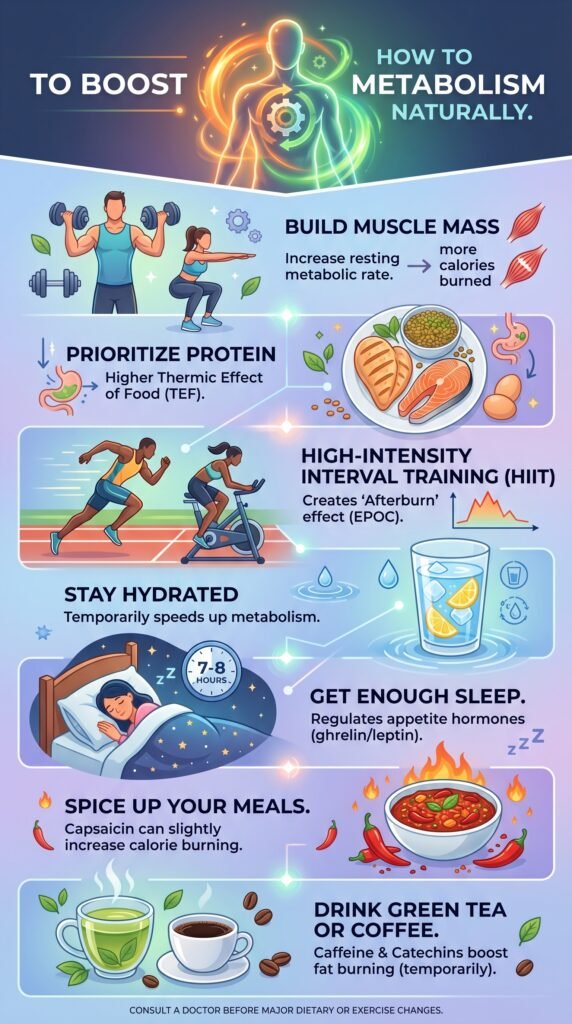
The good news? There are real, evidence-based ways to boost metabolism naturally — no pills, no gimmicks, no extreme diets required. Here’s what actually works:
1. Build Muscle With Strength Training
Muscle burns more calories at rest than fat does. Adding even a small amount of lean muscle mass through resistance training (weightlifting, bodyweight exercises) can meaningfully increase your resting metabolic rate. Aim for 2–3 strength sessions per week.
2. Don’t Skip Breakfast (Especially Protein)
Eating a high-protein breakfast helps jumpstart your metabolism in the morning and reduces cravings throughout the day. Eggs, Greek yogurt, or a protein smoothie are all great options.
3. Eat Enough — Don’t Crash Diet
Drastically cutting calories signals your body to slow down metabolism to conserve energy. Instead, eat in a moderate calorie deficit (300–500 calories below maintenance) to lose weight without triggering metabolic slowdown.
4. Stay Hydrated
Even mild dehydration can slow metabolic processes. Drinking cold water may give your metabolism a small temporary boost, as your body uses energy to warm the water to body temperature. Aim for 8–10 glasses per day.
5. Prioritize Sleep
Poor sleep disrupts the hormones that regulate hunger (ghrelin and leptin) and can reduce insulin sensitivity, making it harder for your body to process energy efficiently. 7–9 hours per night is the target for most adults.
6. Move More Throughout the Day
Beyond formal exercise, everyday movement (walking, taking the stairs, standing while working) adds up significantly. This is called NEAT — Non-Exercise Activity Thermogenesis — and it can account for hundreds of extra calories burned daily.
7. Drink Green Tea or Coffee
Both green tea and coffee contain compounds that can give a modest, short-term boost to metabolic rate. Green tea contains EGCG, a plant compound that may help increase fat burning. Coffee’s caffeine has a similar effect.
8. Eat More Protein
Digesting protein requires more energy than digesting carbs or fat — this is called the thermic effect of food. A high-protein diet can temporarily boost metabolism by 15–30% compared to just 5–10% for carbs.
9. Manage Stress
Chronic stress elevates cortisol, which can promote fat storage (especially in the abdominal area) and interfere with healthy metabolic function. Meditation, deep breathing, yoga, and time outdoors can all help.
10. Spice Up Your Meals
Spicy foods like chili peppers contain capsaicin, a compound that may give a small, temporary boost to metabolic rate. It won’t work miracles, but every little bit adds up.
The goal of all these strategies is to boost metabolism naturally — sustainably and without risking your health in the process.
Best Foods That Support a Healthy Metabolism
What you eat plays a direct role in how efficiently your body burns energy. Here are some of the best metabolic-supporting foods to add to your diet:
| Food | Why It Helps |
|---|---|
| Eggs | High protein, rich in B vitamins needed for energy production |
| Lean Chicken & Turkey | High thermic effect; builds calorie-burning muscle |
| Salmon & Fatty Fish | Omega-3s support thyroid health and reduce inflammation |
| Green Tea | Contains EGCG, which may increase fat oxidation |
| Chili Peppers | Capsaicin provides a small metabolic boost |
| Coffee | Caffeine temporarily increases metabolic rate |
| Legumes (Lentils, Beans) | High protein and fiber slow digestion and stabilize blood sugar |
| Whole Grains | Complex carbs provide sustained energy without blood sugar spikes |
| Broccoli & Leafy Greens | Rich in iron and B vitamins that support cellular energy production |
| Water (cold) | Hydration is essential; cold water forces the body to burn calories to warm it |
Focus on building meals around protein, fiber, and healthy fats — this combination keeps blood sugar stable and your metabolism humming along steadily all day.
Common Metabolism Myths (Busted)
Let’s tackle a few more myths that continue to circulate online and in gyms:
“Eating after 8 PM causes weight gain.” Timing matters far less than total daily calorie intake. Late-night eating can lead to weight gain if it means you’re consuming excess calories — but the clock itself isn’t to blame.
“Supplements can dramatically boost your metabolism.” Most “fat burner” supplements have little to no proven effect on metabolism. Many are poorly regulated and can be dangerous. Stick to the proven lifestyle strategies above.
“Women have slower metabolisms than men.” Women tend to have slightly lower BMRs than men, largely because men typically have more muscle mass. However, the difference is much smaller than many assume, and women can absolutely optimize their metabolic rate through the same strategies.
“Cardio is the best way to speed up metabolism.” Cardio burns calories during exercise, but its effect on resting metabolic rate is limited. Strength training, on the other hand, builds muscle — which keeps burning calories long after your workout is over. A combination of both is ideal.
“Once your metabolism slows down, there’s nothing you can do.” This is probably the most damaging myth of all. This is metabolism explained simply: your metabolic rate is not fixed. With the right habits, you can meaningfully influence how fast your body burns energy at any age.
Frequently Asked Questions (FAQs)
Q1: What is metabolism in the simplest terms?
Metabolism is the process your body uses to convert food and drink into energy. It includes every chemical reaction that keeps you alive — from breathing to digestion to building new cells. When people talk about having a “fast” or “slow” metabolism, they’re referring to how quickly their body burns through that energy.
Q2: Can I permanently speed up my metabolism?
You can make lasting improvements to your metabolic rate, yes. Building muscle through consistent strength training is the most effective long-term strategy, since muscle burns more calories at rest than fat. Maintaining an active lifestyle, eating enough protein, and prioritizing sleep also contribute to a sustainably elevated metabolic rate.
Q3: Does metabolism slow down with age?
Yes, metabolism does tend to slow gradually with age — primarily because most people lose muscle mass as they get older (a process called sarcopenia). However, regular exercise (especially strength training) can significantly slow this decline and help you maintain a healthy metabolic rate well into your 60s, 70s, and beyond.
Q4: Why do I gain weight even when I don’t eat much?
Several factors could be at play. Hormonal imbalances (especially low thyroid function) can dramatically slow metabolism and cause unexplained weight gain. Stress, poor sleep, certain medications, and underlying health conditions can also be factors. If you’re genuinely eating in a calorie deficit and still gaining weight, it’s worth seeing a doctor to rule out medical causes.
Q5: What is the difference between metabolism and metabolic rate?
Metabolism refers to all the chemical processes in your body that maintain life. Metabolic rate is a measure of how fast those processes occur — specifically, how many calories your body burns over a given period. Your basal metabolic rate (BMR) is the number of calories you burn at complete rest.
Q6: Does drinking water boost metabolism?
Yes, temporarily. Research suggests that drinking 500ml (about 17 oz) of water can increase metabolic rate by 10–30% for about an hour. Staying well-hydrated also supports optimal cellular function, which is essential for a healthy metabolism. Cold water may provide a slightly larger effect, as the body uses energy to bring it to body temperature.
Q7: Is what is metabolism different from digestion?
Yes, though they’re related. Digestion is the mechanical and chemical process of breaking down food in your stomach and intestines. Metabolism is the broader term for what happens after that — how your cells use, store, and recycle the nutrients that digestion extracts from food. Digestion is one part of the metabolic process.
Conclusion: You Have More Control Than You Think
By now, you have a solid understanding of what is metabolism — not just as a buzzword, but as the very foundation of how your body works every single moment of the day.
Here’s the bottom line: your metabolism is not your enemy, and it’s not out of your control.
Yes, genetics plays a role. Yes, age matters. But the daily choices you make — how you eat, how you move, how you sleep, how you manage stress — have a very real and measurable impact on how efficiently your body burns energy.
You don’t need to overhaul your entire life overnight. Start small. Add a few strength training sessions to your week. Prioritize protein at breakfast. Drink more water. Go to bed 30 minutes earlier.
These aren’t dramatic changes, but they compound over time. And that’s what understanding what is metabolism is really all about — not quick fixes, but building habits that support your body’s natural ability to thrive.
Your body is already working hard for you, every second of every day. Give it the right support, and it will reward you with more energy, better health, and a body that functions the way it’s designed to.
This article is intended for informational purposes only and does not constitute medical advice. If you have concerns about your metabolic health, please consult a qualified healthcare professional.